
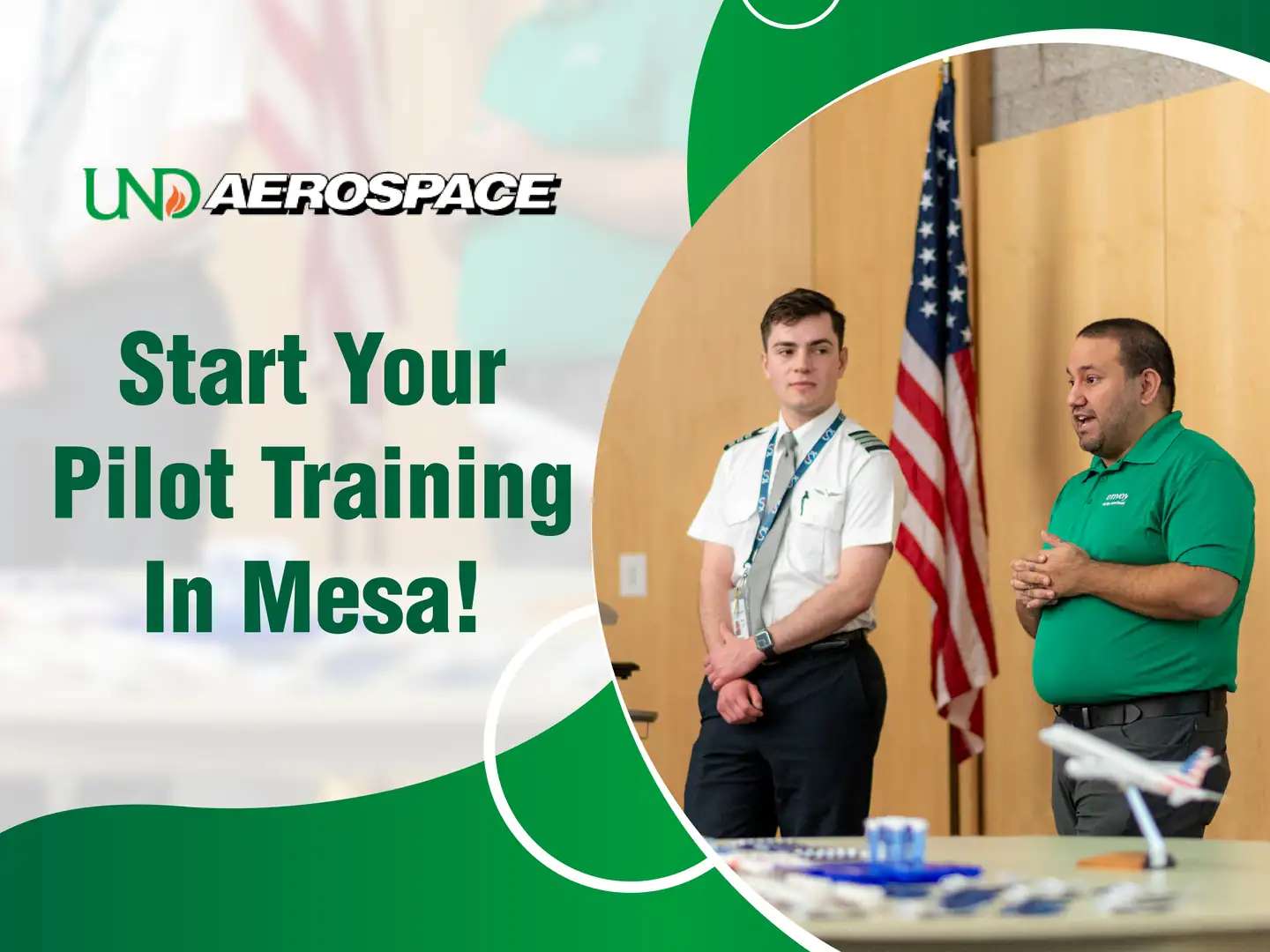
Pilot Training in Mesa, AZ: Your Path to Becoming a Professional Pilot
Have you ever wondered what it would take to turn your interest in flying into a career? Maybe you're finishing high school, thinking about a career change, or looking for a clear path into aviation. Whatever brought you here, finding the right flight school is an important first step.
If you're searching for the best pilot training in Mesa, Arizona, UND Aerospace Foundation Phoenix offers a structured path toward a professional flying career. Our flight training center at Mesa Gateway Airport helps students develop the knowledge, practical flying skills, and decision-making skills needed to become a certified pilot.
Ready to explore your options? Contact UND Aerospace Foundation Phoenix to learn about our professional pilot training programs. We're here to help you choose a pathway that fits your career goals.

Why Choose Mesa for Your Pilot Training?
Where you learn to fly significantly influences your training experience. Arizona is an ideal choice for many aspiring pilots, thanks to the diverse flying environments and sunny weather that support a consistent training schedule year-round.
Mesa stands out by placing students within the vibrant aviation community of the Phoenix metropolitan area. Plus, training at the Mesa Gateway Airport offers valuable experience at an airport with an active control tower. This environment helps students master essential communication with air traffic controllers and learn to follow vital airport procedures from the very start.
For students comparing flight schools in Phoenix and its neighboring regions, our Mesa flight school is an excellent option. We offer a blend of world-class training facilities, a strategic location, and early exposure to real-world flying conditions, all of which can enhance your pilot training and cockpit preparedness.

How to Become a Pilot: Understanding the Training Process
Starting flight training can feel like a big step, especially if you have never been inside a cockpit. Understanding the main stages can make the process easier to navigate.
Your exact training plan will depend on your experience, career goals, program requirements, and progress.
1. Explore Aviation and Understand Your Options
Before committing to a training program, take time to learn what being a pilot involves. A discovery flight can give you a firsthand look at the cockpit, introduce you to basic flight controls, and help you decide whether flying is something you want to pursue.
You can also speak with a flight school about its training structure, admission requirements, costs, and career pathways.
At UND Aerospace Foundation Phoenix, prospective students can explore professional pilot training options and learn how the program fits their goals. Starting with these conversations can help you make an informed decision before committing your time and resources.
2. Work Toward Your Private Pilot Certificate
The private pilot certificate is a key milestone for many aspiring professional pilots. It introduces the skills and knowledge needed to operate an aircraft safely.
Training combines ground instruction with practical flight lessons. You'll study topics such as weather, navigation, aircraft systems, flight planning, and aviation regulations. In the aircraft, you'll develop skills in takeoffs, landings, turns, and other essential maneuvers. You'll also learn to make decisions based on changing conditions rather than simply following a checklist.
A private pilot certificate is not the same as a commercial pilot certificate. It generally does not authorize you to fly as a pilot for compensation or hire, subject to specific regulatory exceptions. For students pursuing professional aviation, it’s an important step toward more advanced training.
3. Build Advanced Skills Through Instrument Training
Instrument training helps pilots learn to fly using the aircraft's instruments when outside visual references are limited. This requires a different level of concentration, planning, and control.
You'll develop skills in instrument interpretation, navigation, communication, and following instrument flight procedures. These abilities are important for pilots who want to operate in a wider range of conditions. Instrument training also helps prepare students for the demands of commercial aviation. Pilots must understand how weather, aircraft performance, and operational requirements affect each flight.
The experience gained at this stage provides a foundation for further training and more complex flying tasks.
4. Earn Your Commercial Pilot Certificate
If your goal is to get paid to fly, commercial pilot training is a major milestone. A commercial pilot certificate allows qualified pilots to perform certain flying jobs for compensation or hire, within the privileges and limitations of their certificate and ratings. Career options may include aerial photography, banner towing, survey work, and other commercial aviation operations.
To qualify, you must meet the applicable Federal Aviation Administration (FAA) requirements, complete the required training and flight experience, pass the knowledge test, and demonstrate your skills during a practical test.
The required flight experience depends on the training route. For example, FAA Part 61 and Part 141 programs have different requirements, so prospective students should confirm which rules apply to their chosen program.
Commercial pilot training also goes beyond learning new maneuvers. You'll work on precision, judgment, flight planning, and the ability to recognize and manage risks.
UND Aerospace Foundation offers industry-leading commercial pilot training in Mesa, providing students with a comprehensive accelerated curriculum designed to equip them with the skills and knowledge necessary for a successful aviation career.

What Makes UND Aerospace Foundation Phoenix Worth Considering?
Choosing among top flight schools in Arizona involves more than comparing locations. You need a program that supports your goals and provides a clear structure for developing your skills.
UND Aerospace Foundation Phoenix offers professional pilot training at its Mesa flight school, with a focus on structured instruction and progression through the required stages of flight training.
Structured Training With a Clear Direction
A structured program helps you understand what you're learning, why each stage matters, and how it connects to your long-term plans.
UND Aerospace Foundation Phoenix offers two pilot training pathways: an accelerated non-credit pathway designed for students seeking professional flight training and a collegiate pathway that combines flight training with an aviation degree through Chandler-Gilbert Community College.
Both pathways use FAA Part 141 flight training, but they differ in pace and academic components. The right choice depends on your goals, educational plans, and ability to commit to the training schedule.
Training That Perfectly Combines Classroom Learning and Hands-on Flying
Becoming a capable pilot requires more than spending time in an aircraft. You must understand the principles behind what you're doing and apply them when making decisions.
Ground instruction helps you learn aviation theory, regulations, weather, navigation, and aircraft performance. Flight lessons allow you to put that knowledge into practice.
UND Aerospace Foundation Phoenix incorporates ground instruction and practical flight training into its professional pilot program. This combination helps students connect classroom concepts with the decisions they make in the cockpit.
How Long Does Pilot Training in Mesa Take?
The timeline depends on the program you choose, your previous experience, training availability, and how quickly you meet each requirement. At UND Aerospace Foundation Phoenix, our accelerated professional pilot program takes motivated students 12 to 15 months to complete, though individual progress and circumstances can affect completion time.
An accelerated schedule requires commitment. Students need to keep up with ground instruction, prepare for lessons, study outside scheduled training, and maintain consistent progress. Before enrolling, ask what the published timeline includes, which certificates and ratings are covered, and what additional training might be needed to reach your goals.
It's also worth discussing the full cost of training. Tuition, aircraft use, testing fees, supplies, and other expenses can vary. Getting a clear picture of these costs can help you plan your finances and avoid surprises.
Start Your Pilot Training in Mesa At UND Aerospace Foundation
Choosing a flight school is an important decision, but you don't need to have every detail figured out before taking the first step. If you're researching the best Mesa flight school, start by identifying your goals, exploring available training pathways, and asking questions about requirements, schedule, and costs.
UND Aerospace Foundation Phoenix provides structured professional pilot training in Mesa for students who want to obtain a commercial pilot certificate and build the skills needed for a successful aviation career.
Ready to take the next step? Contact the UND Aerospace Phoenix flight training center to discuss your goals, compare available training pathways, and learn how to enroll.